Written by

Streams without listener behavior usually mean the campaign is wasting money.
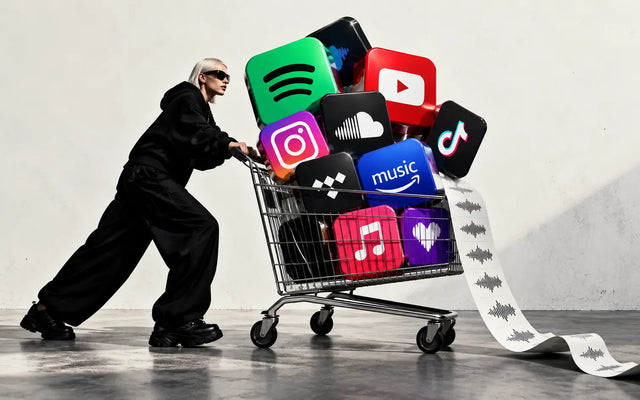
Music streaming promotion is the process of increasing discovery and engagement for a track, album, or artist profile specifically on streaming platforms. It differs from broad social-media promotion because the target action is listening, saving, following, playlisting, or returning. PromoSoundGroup runs music promotion across Spotify, Apple Music, Deezer, TIDAL, Amazon Music and other streaming environments, so every campaign is measured by what listeners do inside the platform rather than by impressions elsewhere.
What Is Music Streaming Promotion?
Music streaming promotion means using platform-specific activity to help a release or artist profile gain discovery, listening behavior, profile growth, and release visibility. It focuses on music promotion in streaming services, not general reach from posts, short videos, or influencer mentions.
A normal campaign creates a visible lift in plays, listeners, saves, follows, playlist adds, or repeat listening after release activity begins. A real problem appears when streams rise but listeners do not save, follow, revisit, or move deeper into the catalogue.
The core object is the release or artist profile, and its useful properties are platform availability, listener access, catalogue path, profile completeness, track metadata, and measurement window. If one of those properties is weak, streaming music promotion may create exposure without durable audience growth.
How Does Music Streaming Promotion Work?
Music streaming promotion works by choosing a release, selecting relevant platforms, defining the main metric, launching listening-focused activity, and measuring listener behavior. The process should connect discovery to a clear next action inside the streaming environment.
- Choose the release or artist profile that needs visibility.
- Select the streaming platforms where the likely audience already listens.
- Define one main campaign goal, such as saves, followers, repeat plays, or catalogue discovery.
- Launch promotion around the release date, pre-save period, or catalogue push.
- Track listener and engagement signals by platform, not as one blended number.
- Continue, pause, or adjust based on saves, follows, playlist adds, and repeat listening.
This sequence matters because different streaming platforms reward different forms of engagement. The order also protects the budget: choosing the goal before the tactic keeps discovery activity and retention activity from being judged by the same number.
Where Streaming Promotion Appears
Streaming promotion appears inside listening platforms, artist dashboards, playlist ecosystems, recommendation surfaces, search results, and listener libraries. Context changes interpretation because one platform may show saves clearly while another emphasizes followers, plays, reposts, or profile interactions.
- On Spotify, artists often watch streams, listeners, saves, followers, playlist adds, and monthly audience movement.
- On Apple Music, Deezer, TIDAL, and Amazon Music, campaign review usually depends on plays, listeners, library behavior, and artist profile growth where available.
- On SoundCloud, Audiomack, Bandcamp, and Mixcloud, profile visits, community reactions, reposts, genre discovery, and catalogue listening can matter more than mainstream playlist movement.
- On additional listening ecosystems, market fit and genre behavior decide whether the platform deserves budget.
Which Streaming Platforms Can Artists Promote On?
Artists can promote music on streaming platforms that match their audience, release type, and genre behavior. A focused campaign usually performs better than spreading a small budget across every possible service.
| Platform type | Examples | Primary use |
|---|---|---|
| Major streaming services | Spotify, Apple Music, Amazon Music, Deezer, TIDAL | Track and album discovery, listeners, saves and follows; Spotify for Artists and Apple Music for Artists report these differently, so compare each service to itself |
| Artist and community streaming | SoundCloud, Audiomack, Bandcamp, Mixcloud | Genre communities, DJ and producer discovery, profiles and catalogues |
| Other listening ecosystems | Pandora, Napster and other supported services | Additional audience reach depending on market and genre |
A new pop single may justify a Spotify-first campaign because playlist adds and saves can show early demand. A DJ mix, beat tape, or underground electronic release may gain better signals from SoundCloud, Mixcloud, or Audiomack before major-service expansion.
Which Metrics Matter in Streaming Promotion?
The most useful streaming metrics are plays, unique listeners, saves, followers, playlist adds, and repeat listening. Raw play volume is only one signal, so artists should compare reach with actions that show intent.
| Metric | What it tells the artist |
|---|---|
| Plays / streams | How much listening activity a release receives |
| Unique listeners | How many individual listeners are being reached |
| Saves / library adds | Whether listeners want to return to the track |
| Followers | Whether promotion converts listeners into an ongoing audience |
| Playlist adds | Whether listeners or curators are adding the track to playlists |
| Repeat listening | Whether listeners return after the first play |
Streams and listeners are not the same metric. One listener can generate multiple streams, so a campaign with high plays and low unique listeners may be reaching fewer people than the top-line number suggests.
Saves and followers matter because they show whether attention converts into a reachable audience. Playlist adds matter because they can extend listening beyond the paid or active promotion window.
Two reporting details are worth knowing before you read a dashboard. Spotify counts monthly listeners on a rolling 28-day window, so the figure moves for weeks after a campaign ends and a drop in it is not automatically a failed campaign. Saves and follows are also the actions that feed personalised placement such as Release Radar, which is why a track with fewer streams but a healthy save rate often keeps moving after the promotion stops.
Streaming Promotion for a Single, Album, or Artist Profile
The right campaign focus depends on what needs growth: one track, a project, or the full artist profile. Each focus requires a different measurement pattern.
| Campaign focus | Main objective | What to track |
|---|---|---|
| Single | Create discovery around one track | Listeners, saves, repeat listens, follows |
| EP / album | Distribute attention across a project | Track-level listening, catalogue discovery, follows |
| Artist profile | Grow long-term profile visibility | Followers, monthly audience, repeat listeners |
Single campaigns are useful when the release has one clear hook, playlist target, or content moment. Album campaigns need track-level review because one song may create the entry point while another drives repeat listening.
How to Build a Streaming-Only Promotion Campaign
A streaming-only campaign should use one release goal, one measurement window, and one to three priority platforms. This keeps the budget tied to listener behavior instead of scattered visibility.
- Define one primary release goal: discovery, saves, followers, playlist adds, or repeat listening.
- Choose one to three priority streaming platforms based on audience fit.
- Select the main listener metric for each platform before spending.
- Coordinate campaign timing with the release date, editorial pitch window, or catalogue push.
- Review platform data separately so Spotify, Apple Music, Deezer, and SoundCloud signals are not blended into one weak average.
- Keep the channels that produce relevant behavior, and reduce spend where plays do not lead to saves, follows, or repeat sessions.
For a new release, the safest structure is a short pre-release setup, release-week activation, and post-release review. Catalogue direction belongs in that plan: a listener who discovers one song needs an obvious next track, or the campaign converts attention into nothing.
PromoSoundGroup works at this stage of the plan: its music streaming promotion covers services such as Spotify, Apple Music, Deezer, TIDAL, Amazon Music, SoundCloud, Audiomack, Bandcamp, Mixcloud, Pandora and Napster, so one campaign can be built around the platforms that matter for the release instead of one service at a time.
Decision Tree: Diagnose Campaign Quality Fast
A useful diagnostic separates exposure problems from conversion problems. The fastest check is to compare plays, listeners, saves, followers, playlist adds, and repeat listening within the same time window.
- If plays rise but unique listeners stay low, the same people may be generating repeated activity instead of broad discovery.
- If listeners rise but saves stay flat, the track may be reaching people who do not intend to return.
- If saves rise but followers do not, the song may work better than the artist profile or catalogue path.
- If one platform improves while others stay flat, the audience fit is platform-specific rather than campaign-wide.
- If release-week numbers rise then stop immediately, the campaign may lack post-release reinforcement.
- If playlist adds appear without repeat listening, the playlist exposure may not be reaching the right listeners.
How to Measure Whether Streaming Promotion Is Working
Streaming promotion is working when reach turns into listener intent. Plays alone do not show full campaign quality because they do not reveal how many people listened, whether they saved the track, whether they followed the profile, or whether they returned later.
Compare raw streams with unique listeners to understand reach. Compare listeners with saves and follows to judge conversion. Compare release-week activity with repeat listening to see whether the campaign created temporary exposure or an audience signal.
A campaign that produces 20,000 plays and almost no saves may be weaker than a smaller campaign that produces fewer streams but stronger library adds and followers. High-volume attention and retention are different outcomes, and only retention tells you what the audience will be worth on the next release.
Common Music Streaming Promotion Mistakes
Most failed campaigns use unclear goals, too many platforms, or one metric for every decision. These mistakes make results hard to interpret even when the release gets activity.
- Using the same goal on every streaming platform, even when each service reports different listener actions.
- Tracking only total streams and ignoring unique listeners, saves, followers, playlist adds, and repeat listening.
- Promoting a release without a clear artist profile, updated catalogue path, or obvious next song.
- Splitting a small campaign across too many platforms before identifying the strongest listening environment.
- Stopping all activity immediately after release week, which limits repeat listening and catalogue discovery.
- Judging a campaign after one day, before platform data and listener behavior have had time to stabilize.
Fix Checklist for Weak Streaming Results
Fix weak results by matching each action to the metric that failed. Do not change every variable at once, because that makes the next review less useful.
- If plays are low, narrow the campaign to the platform where your genre already performs best.
- If listeners are low, adjust targeting, platform choice, or release positioning before increasing spend.
- If saves are low, review the song, intro, cover art, and listener expectation created before the play.
- If followers are low, improve the artist profile, catalogue order, bio, visuals, and next-track path.
- If playlist adds are low, focus on track fit, clean metadata, and release timing rather than mass submission.
- If repeat listening is low, test whether the campaign is reaching casual traffic instead of likely fans.
What Not to Do
Do not buy fake streams, use bot traffic, or chase numbers that cannot be explained by listener behavior. Unsafe tactics can distort analytics, damage platform trust signals, and make future decisions less accurate.
Do not scrape private listener data, imitate curator identities, or pressure users into saves and follows. A compliant campaign respects platform rules, privacy boundaries, and the difference between paid discovery and artificial engagement.
FAQ
What is music streaming promotion?
Music streaming promotion is activity designed to increase discovery, listening, saves, follows, playlist adds, and repeat listening for music inside streaming platforms.
How does music streaming promotion work?
It works by selecting a release or profile, choosing relevant platforms, defining a metric, launching promotion, and measuring listener behavior.
How do you promote music on streaming platforms?
Choose the strongest platform fit, set one goal, time activity around the release, and track results by platform.
Which streaming platforms should independent artists focus on?
Independent artists should focus on one to three platforms where their genre, audience, and catalogue have the best chance of converting listeners.
Which metrics matter most in streaming promotion?
The key metrics are plays, unique listeners, saves, followers, playlist adds, and repeat listening.
Are streams and listeners the same metric?
No. Streams count plays, while listeners count individual people or accounts within the platform's reporting method.
How do saves and followers fit into streaming promotion?
Saves show track-level intent, while followers show that listeners may want future releases from the artist.
Should artists promote one streaming platform or several?
Artists should start with one to three platforms, then expand only when the first campaign shows useful listener behavior.
How do you measure a music streaming campaign?
Measure a campaign by comparing reach with saves, followers, playlist adds, and repeat listening during the same reporting window.
Summary
Music streaming promotion is not just a push for more plays. It is a platform-specific campaign that should turn discovery into measurable listener actions.
The strongest campaigns choose the right release, focus on relevant streaming services, and judge results through saves, follows, playlist adds, and repeat listening. PromoSoundGroup fits this workflow when an artist needs streaming-focused promotion across several supported listening environments at once.

 Ninja Digger

 Fanatikovel